
Amazon | Bookshop.org | StoryGraph | Goodreads
This page contains affiliate links. If you click on the link and purchase a book, I may receive a commission of 4-10% at no extra cost to you. Thanks!
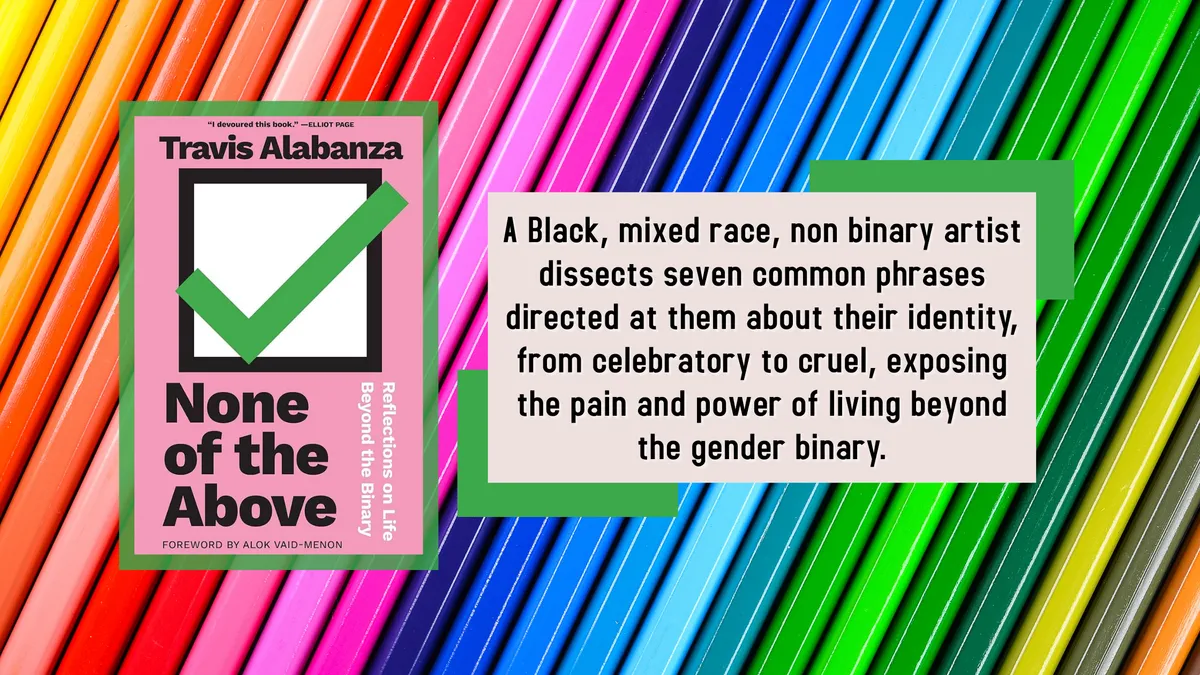
None of the Above by Travis Alabanza interrogates seven phrases that made Alabanza think about the perils and joys of living outside the gender binary. Some phrases appear benign on the surface, others are outright insulting, and a few are empowering yet perplexing. I could have highlighted nearly every line if I had the time. It was a real treat to simultaneously read this book and Cactus Country, a memoir on boyhood written from a non-binary perspective. While both are memoirs, they couldn't stylistically be further apart. Cactus Country is highly narrative, like In the Dream House by Carmen Maria Machado, and this is a more conversational and introspective treatise that zooms out to provide perspective and critique.
Alabanza is gender nonconforming, and their existence as a person with facial hair and body hair while also wearing a dress fries people's brains, but they say it best:
"Allowing fluidity of expression and understanding only hurts patriarchal systems of oppression, and is the very reason it inspires a murderous rage."
They delve into moments where people's subservience to gender essentialism kept them up at night wondering if they could be assigned male at birth (AMAB) and have colorful nails. Such a small thing that consumed sleepless nights.
"Truly, how much time is everyone wasting upholding the binary? If we decide to leave it, how much freer would we be? And for those of us who are trying to depart from it, how lucky are we when we choose ourselves over other people's comfort?"
Alabanza interrogates gender norms, exposing them as the cage they are through their lived experience and the world they want to inhabit. Not a world where everyone has to live within the tight confines of a badly drawn box, but one where fluidity and change is the norm.
"It is because in more ways than one this world makes it exhausting to sit outside any box, despite how often we may hear people saying they are fed up with boxes. I wish we could be whatever we want to be. Yet the world is not set up for this freedom."
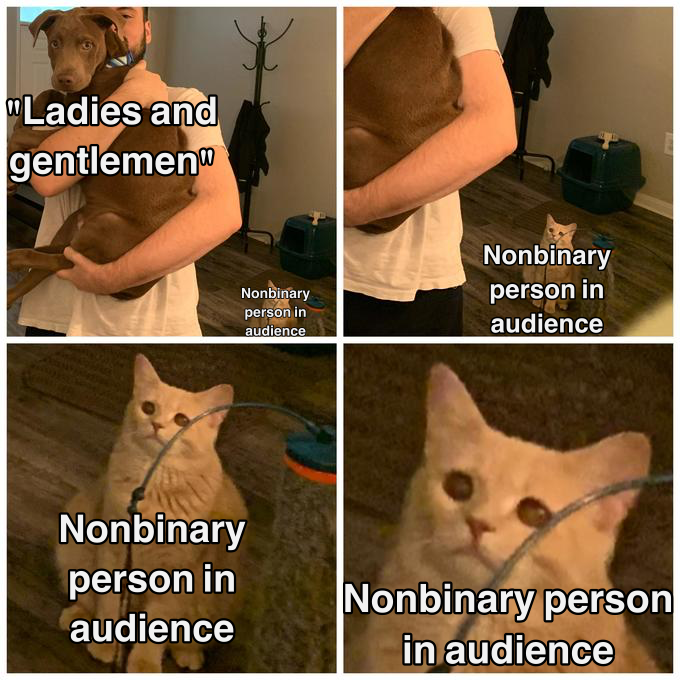
People change, our understanding of ourselves changes, and this should be the norm. We are putting all our eggs into the gender basket, and no one is satisfied with the results, but people will brutalize anyone who refuses to uphold the basket's necessity. Near the end of the book, I was reminded how difficult it must be from a mental health perspective to deal with verbal assaults daily because you want to be seen as a person, not as a gender. I can't imagine the strain of running basic errands knowing that someone might assault me and no one will do a thing to stop it. As a white woman, I know I have certain protections, even if I lack others, and I've never experienced that terror.
"I imagine transporting from the here of the shop into the there of a place where my energy is celebrated and seen rather than contained. A place where we are listening to what someone is saying to us rather than telling them who we are."
This is a necessary read for everyone. We are all invested in gender expectations because it's hard to admit that we've been duped, and we've structured our identities around those expectations. Telling someone their whole life is a lie makes them very defensive. Letting go of harmful norms frees us all. Looking through Alabanza's lens, we can see a world where we set ourselves free from gender strictures and meet people without assumptions and prejudice. it’s a world worth fighting for.
/rae/